Test Control Unit (TCU)
Overview
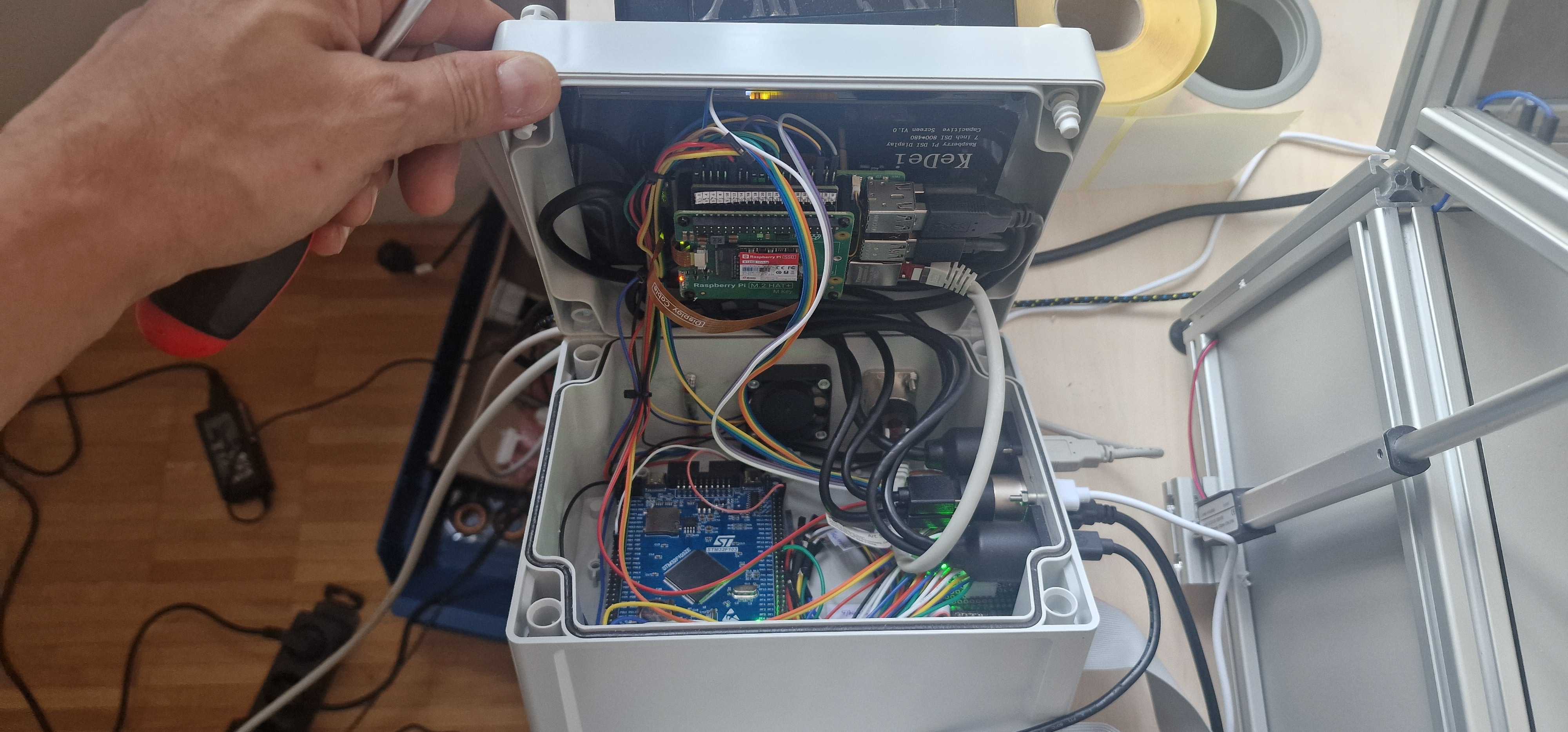
During my work at Izoelektro, I created a test setup based on a Raspberry Pi 5 with a touchscreen, used as a user interface for both ICT and functional test devices.
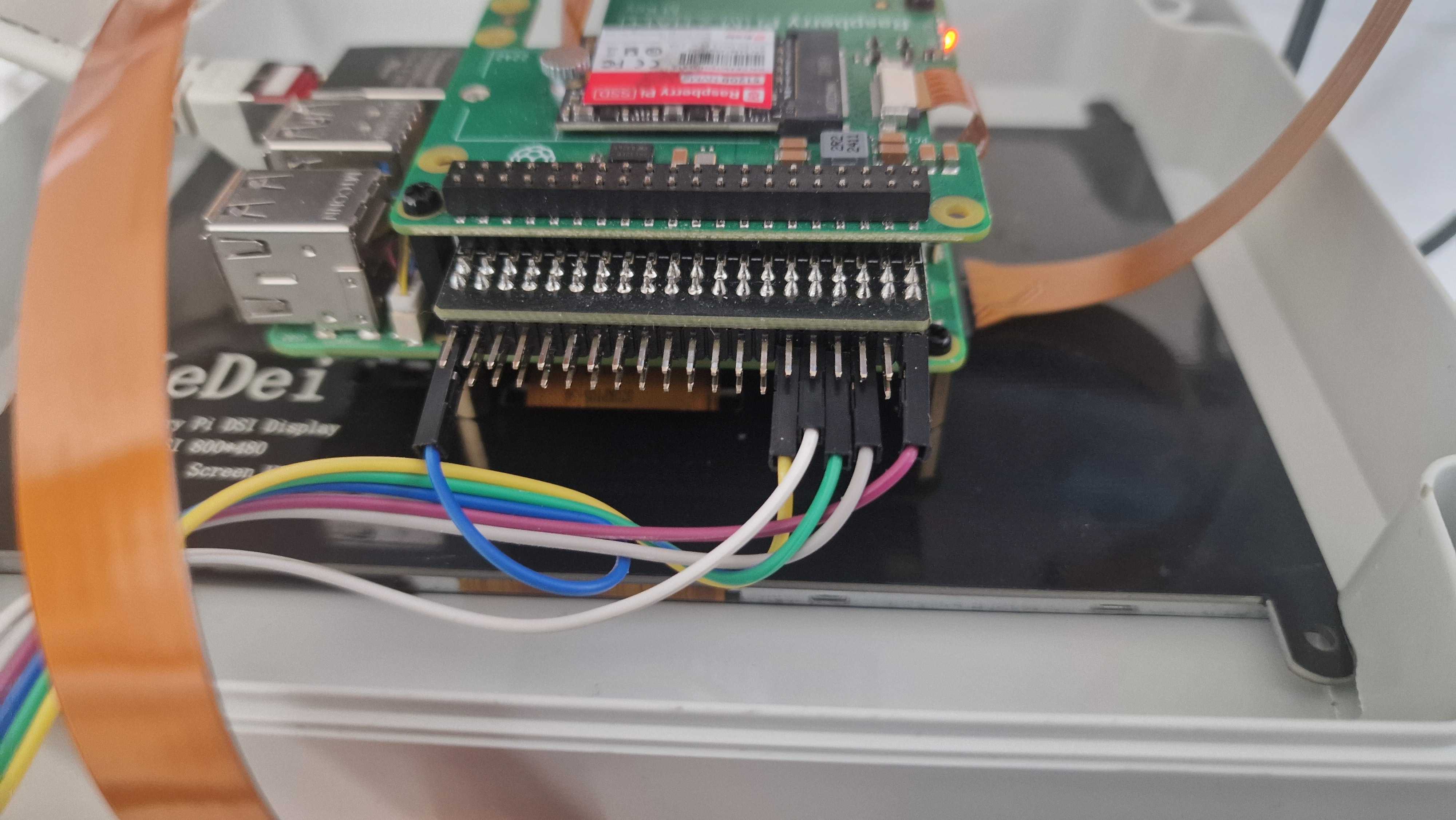
The Raspberry Pi 5 is equipped with an SSD and adapter, ensuring stable operation, fast boot times, and sufficient storage for firmware images, logs, and test results.
IC Test Device
A custom IC test jig, developed by Pinplate, connects to the TCU (Test Control Unit) via a flat cable. For this purpose, I prototyped an adapter that interfaces the Raspberry Pi 5 with an STM32 microcontroller.
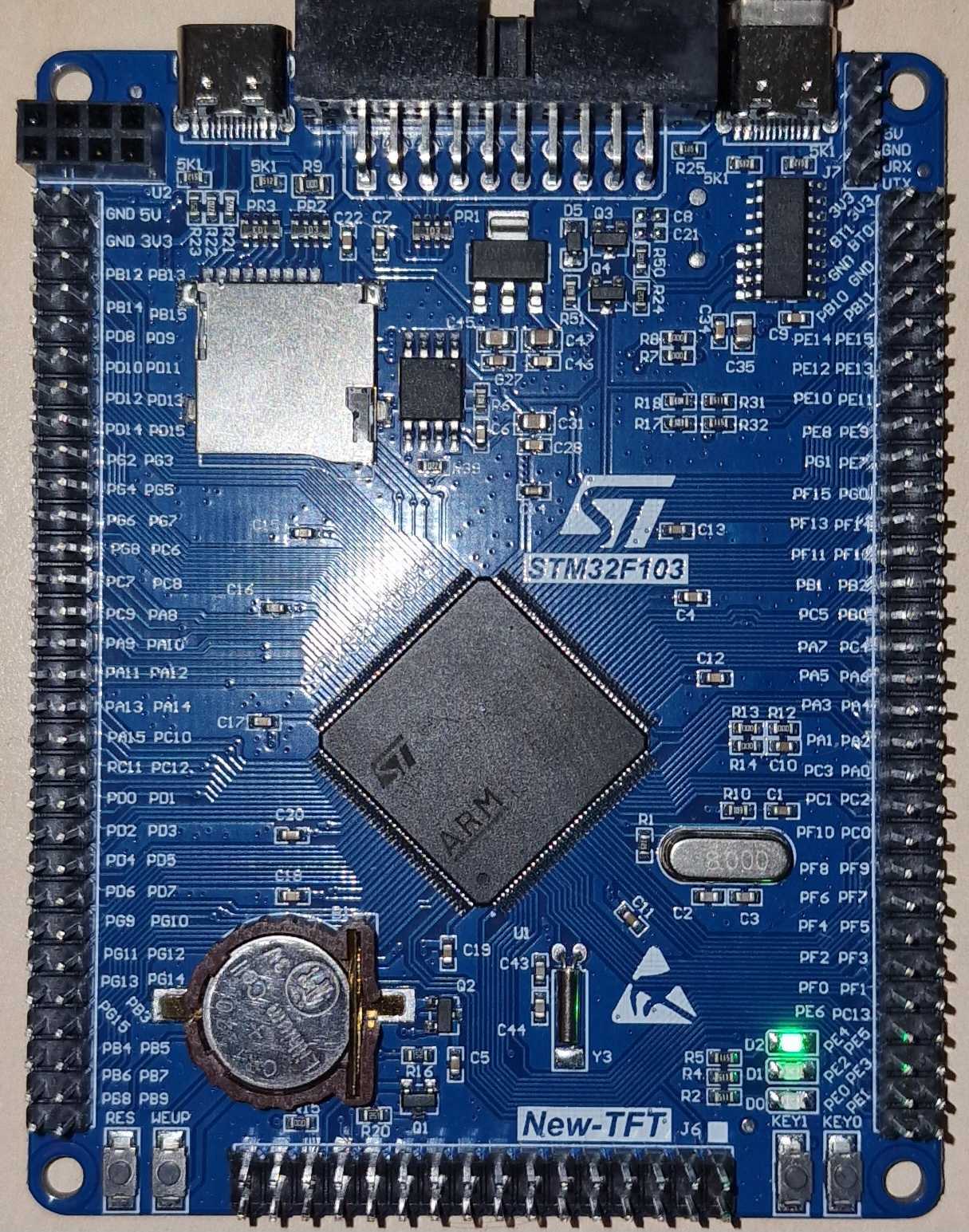
Using OpenOCD, firmware is flashed via a serial connection implemented through the Raspberry Pi GPIO pins. The system resets the device and establishes serial communication.
On boot, the following parameters are read automatically:
- hardware serial number
- LoRa DevEUI
- other device identification data
Using Zephyr Shell, test commands are executed and their output is captured and evaluated. The STM32 is used to trigger signals and validate device behavior.
When the IC test process completes successfully, the release firmware is flashed.
Functional Test Device
The functional test is performed on a fully assembled device to validate real-world operation.
The test verifies:
- EM pulse detection
- presence of leakage current
- correct overall device behavior
The TCU connects to the device via Bluetooth and sends UART commands. Based on the device output, correct behavior is verified.